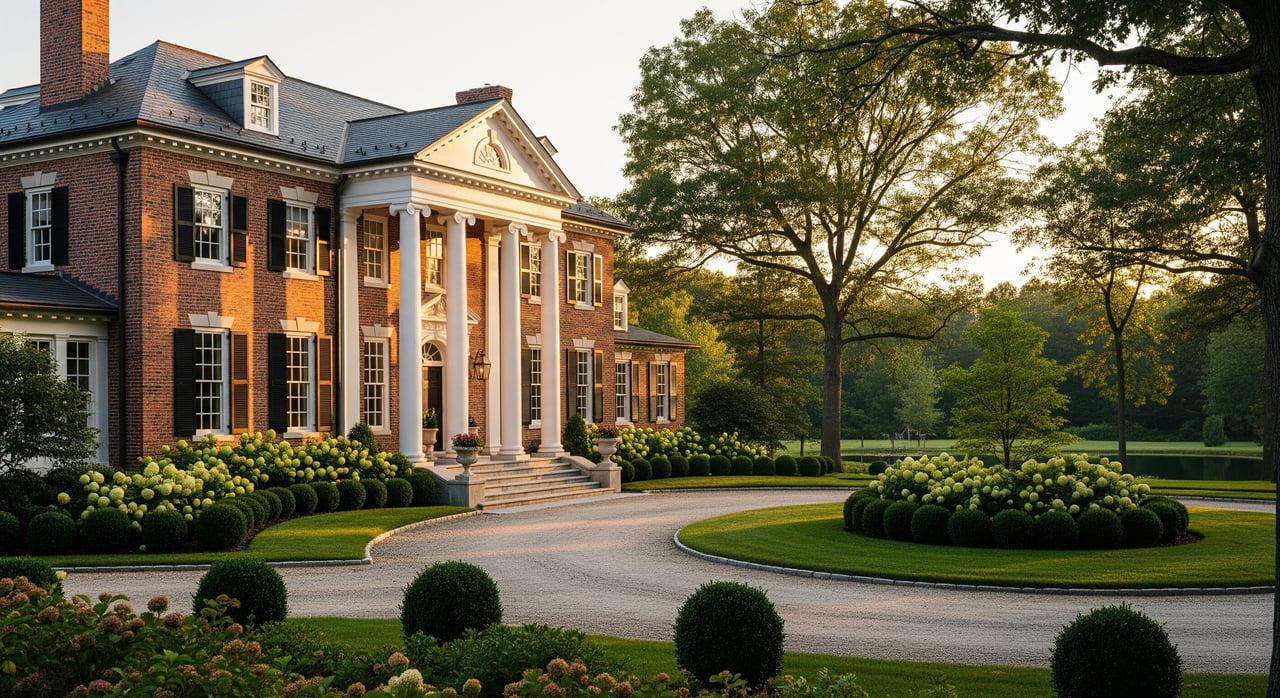
Bloomfield Township Home Valuation Guide for Sellers
November 14, 2025
November 14, 2025
What if you could price your Bloomfield Township home with confidence instead of guesswork? Whether you are thinking about selling soon or simply tracking your equity, knowing your home’s true market value helps you plan the right timing, updates, and strategy. In this guide, you will learn how value is determined, the local factors that move prices in Bloomfield Township, and practical steps to get an accurate number. Let’s dive in.
Home values respond to a few big forces: mortgage rates, local supply and demand, and seasonality. When rates fall, more buyers can afford to act. When inventory tightens, well-priced homes tend to sell faster and closer to list price. Spring often brings more listings and more buyers, which can lift sale prices.
For trustworthy numbers, the most reliable source is local MLS data, such as Realcomp, which captures recent closed sales, new listings, and days on market. County-level sources like Oakland County Equalization and the Treasurer provide property records and millage info. State and national groups, including the Michigan Association of Realtors and industry reports, help you see trend direction.
Keep in mind that Bloomfield Township has a wide range of property types, from traditional subdivisions to custom estates. A single township median can hide big variations. High-end homes trade less often, so there may be fewer true comparables. That is why local expertise and multiple valuation methods matter.
Automated tools use public records and statistical models to estimate value. They are fast and free, and they offer a quick baseline. In Bloomfield Township, they can struggle with larger lots, unique architecture, renovations, or very high-end properties. Use them as a starting point, not the final word.
A CMA from a local agent compares your home to recent closed, pending, and active listings. It adjusts for square footage, beds and baths, lot size, updates, and location nuances. A strong CMA is ideal for setting a listing price and planning your marketing strategy. The quality depends on the agent’s judgment and local knowledge.
A state-certified appraiser provides a formal opinion of value, often required when a buyer’s lender is involved. Appraisers typically use sales comparison, cost approach, and the income method when relevant. Appraisals are more formal and defensible, though they still reflect the market at a moment in time.
| Method | Speed | Cost | Best for | Key limitations |
|---|---|---|---|---|
| AVM | Instant | Free | Quick baseline | Can miss unique features and renovations |
| CMA | 1–2 days | Typically free | Pricing to list and market strategy | Relies on agent skill and local comps |
| Appraisal | 7–14 days | Varies by complexity | Financing, estate, or unique homes | Snapshot in time; may lag fast-moving markets |
Bloomfield Township includes traditional subdivisions, estate lots, and enclaves near cultural and educational amenities. Buyers often consider the assigned public school district and proximity to private institutions. Because expectations vary by micro-market, your pricing should account for nearby sales rather than broad township medians.
Larger lots, mature trees, and private settings are highly valued. Buyers look closely at whether a home has municipal water and sewer versus well and septic. Road maintenance and association rules can also influence demand.
Convenient access to major roads like Telegraph, Woodward, and I‑75 helps many buyers who commute to job centers across the Detroit metro area. Homes with easier access can see stronger interest.
Well-maintained Colonial, Tudor, and custom contemporary styles are common. Updated kitchens and baths, solid mechanicals, and newer roofs support higher prices. Dated interiors or deferred maintenance can slow buyer interest or trigger repair credits after inspection.
Property taxes influence buyers’ monthly carrying costs. Michigan’s Principal Residence Exemption can reduce school operating millage for qualified owner-occupants, which affects affordability. Local zoning, setbacks, and HOA or neighborhood covenants determine what you can add or expand, which can impact long-term value.
Floodplains, wetlands, and conservation easements can limit buildable area and improvements. Many buyers will ask for flood zone status and insurance estimates during due diligence.
Gather local comps. Start with 3 to 6 closed sales from the past 3 to 6 months in your immediate area. In fast-changing markets, the more recent, the better. If you cannot find close matches, expand outward in small steps and note the differences.
Match the key features. Focus on property type, square footage, lot size, bed and bath count, age, condition, and important features like finished basements, garages, and pools. The closer the match, the more reliable your comparison.
Make common-sense adjustments. Compare price per finished square foot and adjust for size differences. Add or subtract value for an extra full bath, for notable upgrades, or for road noise and lot privacy. For luxury homes, each additional feature may have diminishing returns.
Account for time and season. If the market has shifted since a comp sold, adjust your estimate to reflect appreciation or cooling. Spring activity can lift prices, so note the sale month when comparing.
Set a range, not a single number. Present a conservative and an optimistic estimate to reflect the real-world spread of buyer reactions. Then refine the range with a professional CMA.
You do not need a full remodel to impress buyers. Many high-ROI moves are quick and targeted in mature suburban markets.
Timing helps too. Spring and summer usually bring more buyers and greener yards, but a well-priced, well-presented home can sell in any season with the right strategy.
Your ideal approach depends on your timeline, the property’s uniqueness, and recent activity in your micro-market.
If you are buying in Bloomfield Township, review recent comps and the seller’s disclosures. If you need financing, remember that the lender’s appraisal will influence the final loan amount. For custom homes, estates, or properties with limited comparables, consider an independent CMA or appraisal and use appraisal and inspection contingencies suited to the current market.
Key questions to ask any professional: How recent and how close are the comps? How will unique features be adjusted? Can you show the price-per-square-foot logic? For appraisers, ask about experience with Bloomfield Township and with high-end or estate properties.
Ready to get a clear, data-backed number for your home and a plan to maximize it? Schedule your free, no-pressure consultation today with Unknown Company.
Stay up to date on the latest real estate trends.
Experience matters — but experience with heart matters more. From personalized strategy to precision negotiations, every detail is handled with care.